
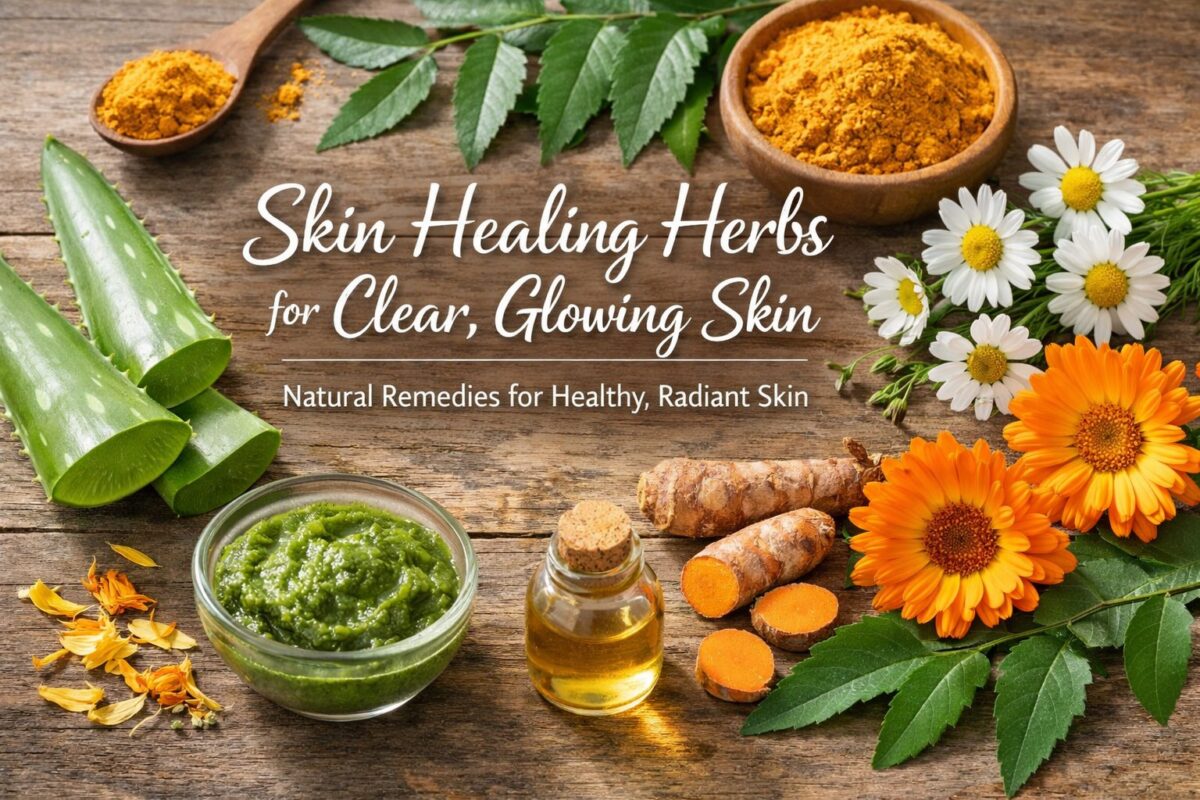
Skin Healing Herbs: 12 Science-Backed Herbs for Clear, Healthy, Radiant Skin
Skin problems rarely start on the surface. Acne, eczema, dullness, inflammation, and slow wound healing are often linked to oxidative stress, microbial imbalance, chronic inflammation, or poor circulation. For centuries, traditional systems such as Ayurveda and Traditional Chinese Medicine have used plant-based remedies to restore balance and support skin regeneration naturally.
Today, research from institutions like National Institutes of Health and Cleveland Clinic confirms that certain botanicals contain bioactive compounds that promote tissue repair, reduce inflammation, and strengthen the skin barrier.
In this comprehensive guide to Skin Healing Herbs, you’ll discover:
- How herbs support skin regeneration
- 12 research-backed herbs for skin healing
- How to use them safely
- Who should avoid them
- Practical home application methods
This is not hype. This is science-supported natural skin care.
Why Herbs Work for Skin Healing
Effective skin healing herbs typically contain one or more of the following properties:
1. Anti-Inflammatory Compounds
Chronic inflammation contributes to acne, redness, psoriasis, and eczema. Many herbs contain flavonoids, polyphenols, and terpenoids that calm inflammatory pathways.
2. Antioxidants
Free radicals damage collagen and accelerate aging. Antioxidant-rich herbs neutralize oxidative stress and support cellular repair.
3. Antimicrobial Effects
Certain herbs inhibit bacteria and fungi linked to acne and skin infections.
4. Collagen Support
Some botanicals stimulate fibroblast activity, improving elasticity and wound healing.
5. Improved Circulation
Better blood flow means more oxygen and nutrients for skin regeneration.
Let’s explore the most effective options.
12 Best Skin Healing Herbs (Backed by Research & Tradition)
1. Aloe Vera
Best for: Burns, irritation, acne, dry skin
Aloe vera contains polysaccharides that stimulate tissue regeneration and reduce inflammation. Dermatological research shows it helps accelerate wound healing and soothe irritated skin.
How to use:
- Apply fresh gel directly from the leaf
- Use 1–2 times daily
Safety:
Perform a patch test before first use.
2. Turmeric (Curcuma longa)
Active compound: Curcumin
Best for: Inflammatory acne, pigmentation, redness
Turmeric has powerful anti-inflammatory and antioxidant effects. Research supported by global health authorities including World Health Organization recognizes turmeric’s long-standing medicinal applications.
How to use:
- Mix turmeric powder with honey or yogurt
- Apply for 10–15 minutes
- Use 2–3 times weekly
Safety:
May temporarily stain skin.
👉 Explore more on role of Turmeric in improving inflammatory skin conditions : National Library of Medicine
3. Neem
Best for: Acne, fungal infections, oily skin
Neem has strong antibacterial and antifungal properties. In Ayurveda, neem is traditionally used to purify the blood and treat chronic skin conditions.
How to use:
- Neem powder + rose water paste
- Apply 15 minutes, rinse
Safety:
Avoid if skin is extremely dry or sensitive.
💡 You can naturally pair neem remedies with insights from Anti-Inflammatory Diet for Natural Healing on naturalhealingtips.com to reduce skin inflammation from within.
4. Calendula
Best for: Wounds, eczema, sensitive skin
Calendula promotes collagen production and supports wound repair. It’s widely used in herbal dermatology formulations.
How to use:
- Calendula-infused oil
- Apply to irritated areas
Safety:
Avoid if allergic to marigolds.
5. Chamomile
Best for: Redness, rosacea-prone skin
Chamomile contains apigenin, which helps calm inflammation and soothe irritation.
How to use:
- Brew chamomile tea
- Cool and apply as toner
Safety:
Patch test recommended.
💡 Chamomile pairs beautifully with herbal teas discussed in Natural Tea Types and Their Preparation on naturalhealingtips.com.
6. Licorice Root
Best for: Hyperpigmentation, dark spots
Licorice contains glabridin, which helps brighten skin and reduce melanin overproduction.
How to use:
- Licorice extract in serum form
- Apply once daily
7. Gotu Kola
Best for: Scar healing, collagen support
Gotu kola stimulates fibroblast production and improves elasticity. It’s often used in scar-reduction creams.
Research from dermatological studies referenced by Harvard Medical School highlights its collagen-supporting potential.
How to use:
- Cream or topical extract
- Use twice daily
8. Holy Basil (Tulsi)
Best for: Acne-prone skin
Tulsi contains antibacterial compounds that reduce acne-causing microbes.
How to use:
- Tulsi paste
- 10-minute mask
9. Green Tea
Best for: Anti-aging, oil control
Rich in EGCG (epigallocatechin gallate), green tea reduces inflammation and protects against UV damage.
How to use:
- Cooled green tea toner
- Daily application
10. Rosemary
Best for: Oily and congested skin
Rosemary has antimicrobial and circulation-boosting properties.
How to use:
- Diluted essential oil (always with carrier oil)
Safety:
Never apply undiluted essential oil.
11. Witch Hazel
Best for: Enlarged pores, excess oil
Witch hazel acts as a natural astringent and reduces inflammation.
How to use:
- Alcohol-free witch hazel toner
12. Manjistha
Best for: Detox support, chronic skin issues
In Ayurveda, manjistha is considered a powerful blood purifier supporting clearer skin over time.
How to use:
- Powder mask
- Herbal supplement (consult practitioner)
👉 Turmeric is another traditional herb known for both internal and skin benefits: Turmeric Benefits: Science, Uses, and Simple Ways to Use Turmeric Daily
How Long Do Skin Healing Herbs Take to Work?
Natural remedies are not overnight solutions.
- Minor irritation: 3–7 days
- Acne improvement: 2–4 weeks
- Scar healing: 4–12 weeks
Consistency is key.
Internal Healing Matters Too
Topical herbs work best when paired with:
- Anti-inflammatory diet
- Hydration
- Adequate sleep
- Stress management
Chronic inflammation from within often manifests on the skin.
Safety Guidelines Before Using Skin Healing Herbs
To maintain responsible health guidance:
- Always perform a patch test
- Pregnant or breastfeeding individuals should consult a doctor
- Chronic skin conditions require dermatologist supervision
- Herbs support healing — they do not replace medical treatment
If you have severe eczema, psoriasis, or infections, seek professional medical advice.
Scientific Evidence Behind Herbal Skin Care
Modern dermatology increasingly studies plant-based compounds for their:
- Anti-inflammatory effects
- Antioxidant protection
- Wound healing acceleration
- Antimicrobial benefits
Research compiled by institutions like the National Institutes of Health continues to evaluate botanical extracts in dermatological applications.
While more large-scale clinical trials are needed, current evidence supports the safe and traditional use of many herbs listed above.
Creating a Simple Herbal Skin Routine
Morning:
- Gentle cleanser
- Green tea toner
- Aloe vera gel
Evening:
- Cleanse
- Neem or turmeric mask (2–3x weekly)
- Calendula or gotu kola cream
Keep it simple. Avoid mixing too many herbs at once.
Frequently Asked Questions
1. Which herb heals skin the fastest?
Aloe vera and calendula often provide the quickest soothing relief for burns and irritation. For acne, neem and turmeric may show visible improvement within weeks.
2. Are skin healing herbs safe for sensitive skin?
Most are gentle, but patch testing is essential. Chamomile and calendula are typically better tolerated.
3. Can herbs permanently cure eczema?
Herbs may reduce symptoms and inflammation but are not guaranteed cures. Eczema is multifactorial and may require medical management.
4. Can I combine multiple herbs together?
Yes, but start slowly. Overloading the skin may cause irritation.
Final Thoughts on Skin Healing Herbs
Skin Healing Herbs offer a powerful bridge between ancient tradition and modern science. When used responsibly, they can:
- Reduce inflammation
- Support collagen production
- Improve skin clarity
- Accelerate healing
- Strengthen the skin barrier
The key is consistency, safety, and realistic expectations.
Natural healing takes time — but when approached thoughtfully, it can be deeply effective.
⚕️ Medical Disclaimer
This article is for educational purposes only and is not intended to diagnose, treat, cure, or prevent any disease. Always consult a qualified healthcare professional before beginning any herbal regimen.





3 thoughts on “Skin Healing Herbs for Clear, Glowing Skin”